Lenka Procházková
Charles University, Prague, Czech Republic
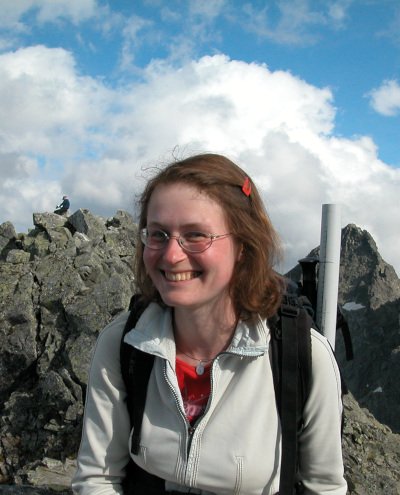
Lenka is a post-doc at Charles University (Prague, Czech Republic), with research interests in the fields of algal ecology, physiological adaptations, strain making, metagenomics, and taxonomy.
Her PhD thesis from 2020 was awarded the third prize of the best European PhD thesis in Freshwater Sciences for the period 2019-2020.
She has published > 45 peer-reviewed papers. Her fieldwork expertise comes from repeated expeditions mainly to Svalbard, the European Alps and High Tatra Mountains. She described more than three genera and 10 species of algae. She received a Ph.D. from Charles University, Czech Republic. She teaches a transmission electron microscope course, field ecology course (for bachelor students), ecology of aquatic organisms, and the lab + theoretical course on ecophysiology of microalgae (for master and PhD students). She co-organized the 3rd Snow Algal Meeting (2022) in Prague with 34 participants from all over the world.
In her free time, she plays the guitar and is involved in volunteering patrols helping to monitor wild carnivores (wolf and lynx) in the frame of the Friend of the Earth program.
Keynote Talk
Snow algae and glacier ice algae biogeography and ecophysiology
Charles University, Faculty of Science, Department of Ecology, Viničná 7, Prague 2, Czech Republic
Long-lasting, melting snowpacks in sub/polar, alpine and forested regions provide a habitat for specialized microalgae thriving in the water film between ice crystals. These photoautotrophs are exposed to low temperatures, extreme high-light, UV irradiation conditions and repeated freeze-thaw cycles.
The main representatives of snow algae belong to the green algal order Chlamydomonadales. Massive occurrence of these cells causes reddish, orange or green snow colorations. Their survival depends on the timing of life cycle changes and specialised metabolite production. While some taxa are cosmopolitan, others have limited geographical distribution. Species at elevations are endangered by earlier snow melt and reduced snow precipitation. Interestingly, there exist forest-associated species that have not been recorded in the alpine zone yet.
The second algal group common in melting snowpacks belongs to the golden-brown algal order Hydrurales. We recently described several new species within this group, which use strategies like polyols production as antifreeze agents.
The most prominent glacial ice algae belong to the Zygnematales. As the closest known relatives of land plants, they are of interest because of their ability to withstand stresses encountered by early land plants. These algae cause dark to pinkish coloration of glaciers. Using ice binding assay and genome mining, we demonstrated that filamentous Ancylonema nordenskioldii produces ice binding proteins to prevent the ice recrystallization that occurs during thawing. Their dark vacuoles provide significant UV and visible light screening. Using analytical methods and Raman spectroscopy, we show that the alga sequesters iron and forms organic metal complexes. The hypervariable ITS2 assists to distinguish genotypes. Single-celled Ancylonema alaskanum is common in the European Alps while its filamentous sister species dominates the Arctic. Our recent expedition to Colombia also revealed a new Ancylonema species.
Keywords: snow, glacier, algae, haplotypes, photosynthesis, pigments, fatty acids
More Information:
Talks at this conference:
| Thu, 10:05 | Snow algae and glacier ice algae biogeography and ecophysiology |