News
22–24 September 2026
We joined the EuroMarine HARMONY workshop on seaweed microbiome research, Paris.
Alexander and Leo Minini took part in HARMONY (Fundamentals and Frontiers in Seaweed Microbiome
Research: Toward Harmonized and Synergistic Discovery), a EuroMarine foresight workshop convened
by Luna van der Loos. The limit on the field is no longer sequencing but comparability: datasets are
produced with different primers, trimming settings, storage buffers and plate layouts, so they are hard
to combine across studies. One session asked whether seaweeds have a core microbiome and what it does,
a second asked what has to be recorded about a sample before anyone else can reuse it.
This is our problem too, in three of our running projects. In KELPRIME we ask whether priming changes
the bacterial community a young sporophyte carries with it. In the MABIT-funded DEFY project we are
sequencing cultivated and wild Saccharina latissima, including shotgun metagenomics, to see
whether biofouling and microbiome differ between selected lines. And in Leo Minini’s PhD on the
oomycete pathogen Eurychasma in kelp, the microbiome is part of the disease question rather than
a side observation: one result relayed in Paris was that the presence of an oomycete predicts the
presence of a particular bacterium, and that running 18S and 16S in parallel would settle it. That is
now on Leo’s list.
We are checking our own metadata against the standard drafted in Paris, and we expect to take part in
the ring test being planned across laboratories, which turns hidden methodological variation into
experimental design rather than noise. A session derived from the workshop is planned for the 9th
European Phycological Congress in Kraków, 30 August to 3 September 2027.
EuroMarine HARMONY »
19 September 2026
Kelp science went to the beach: the Gull i munn read-aloud festival in Valnesfjord.
For Forskningsdagene our group joined the Gull i munn read-aloud festival.
Erica Restoften, who organises the festival, read the children’s book
Noriko på eventyr i tangen by Marie Lenngren aloud, and we then took the
families down to the shore to find the book’s seaweeds for real. Sara Roosvall (NIBIO)
ran a parallel workshop on paint made from seaweed and sea-urchin pigments.
Organised under the KELPRIME project.
Forskningsdagene »
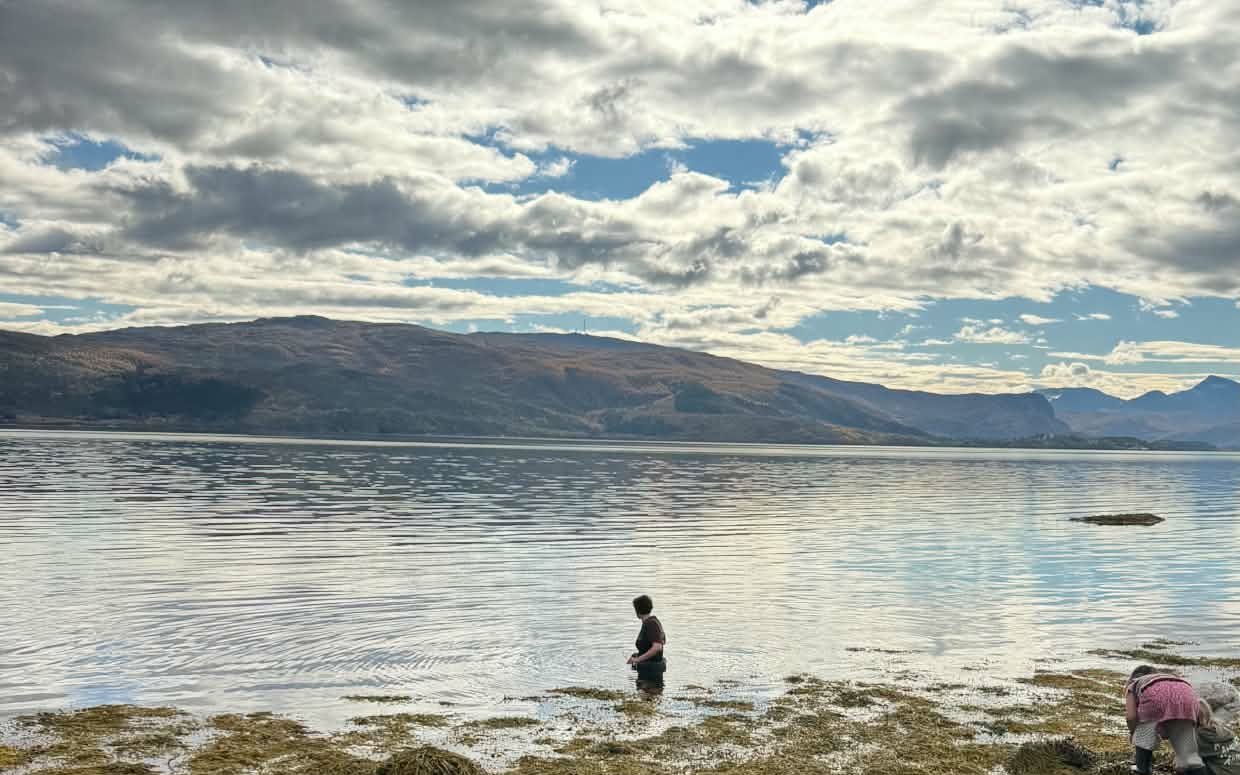
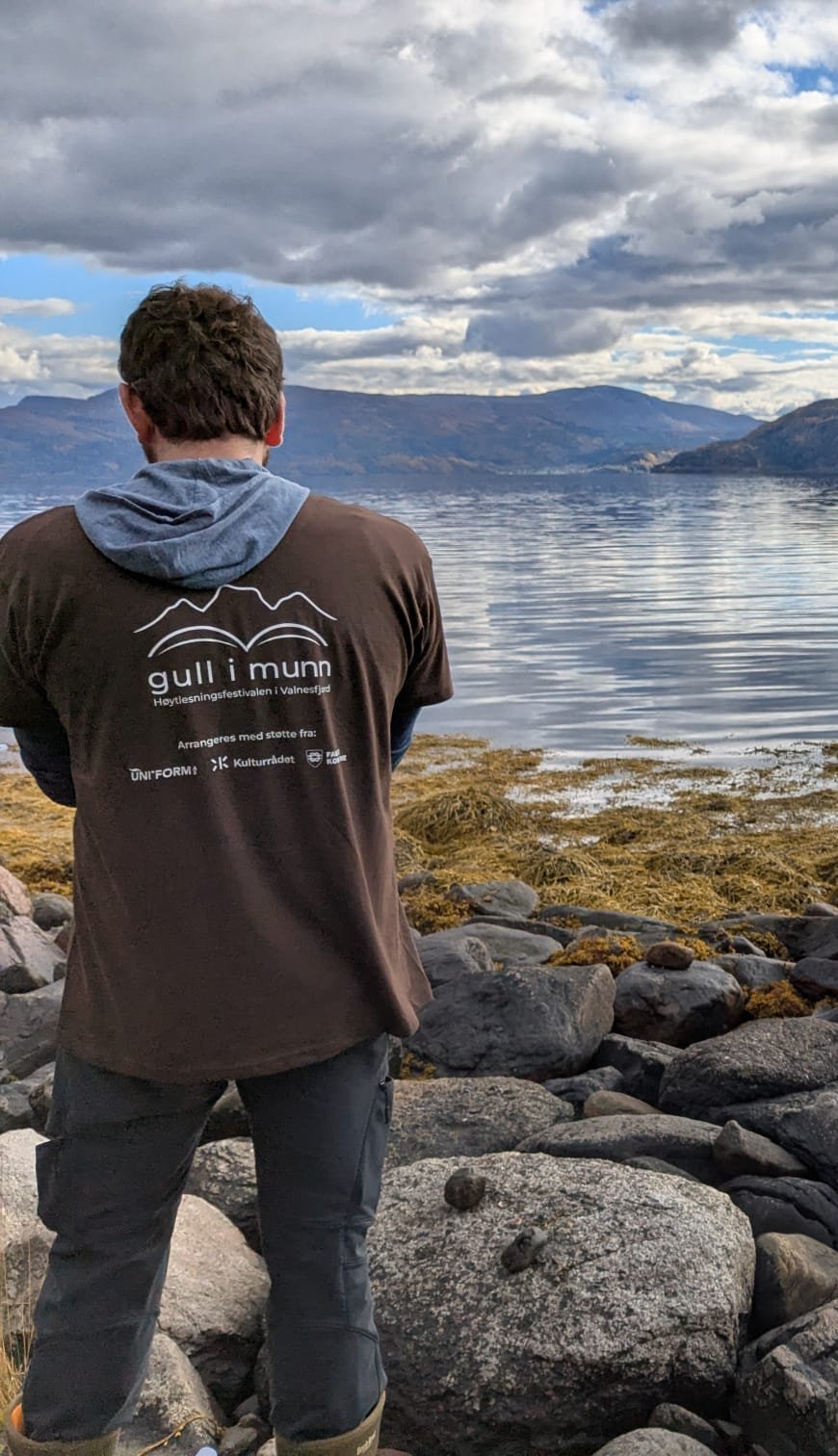
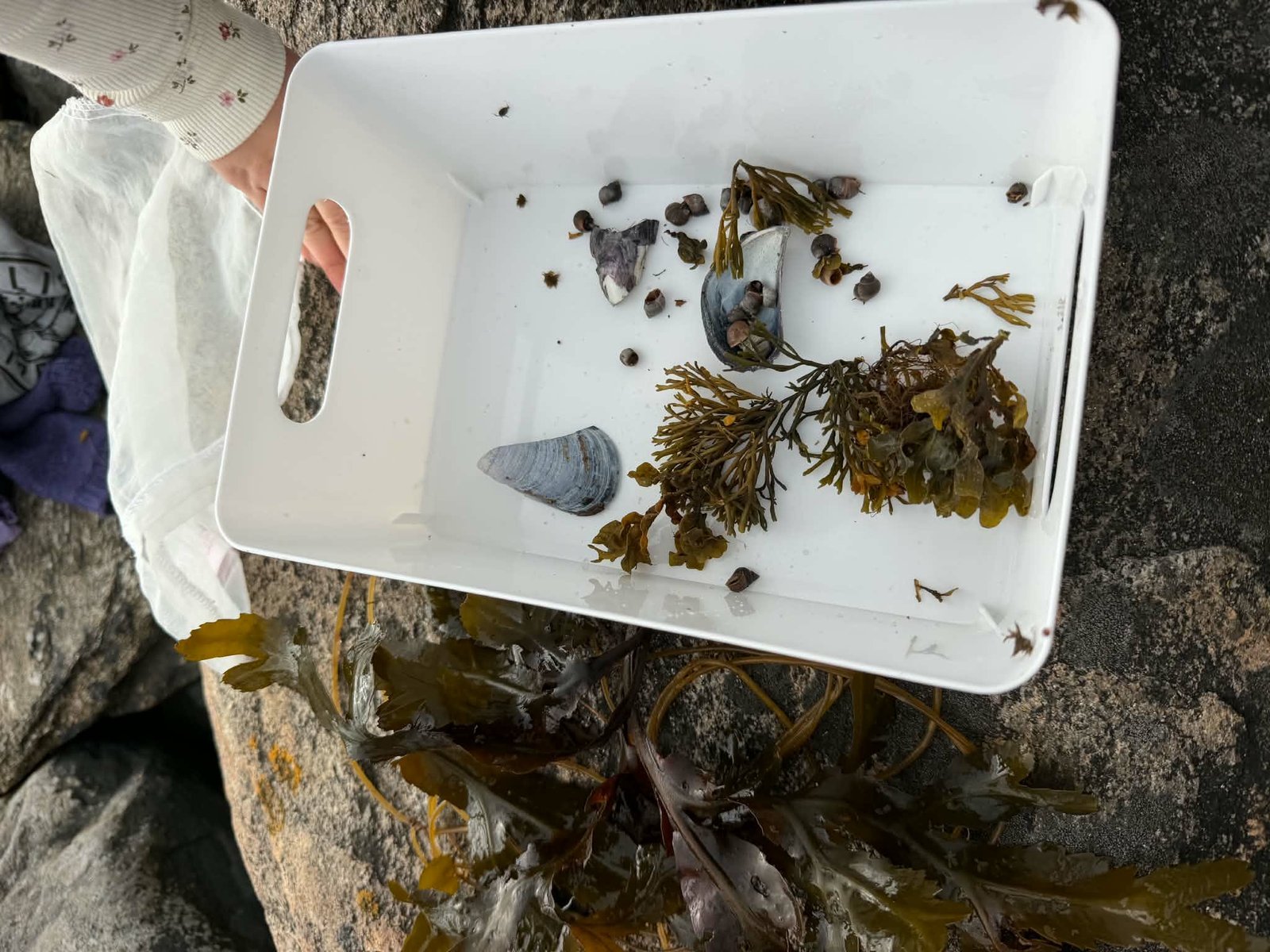
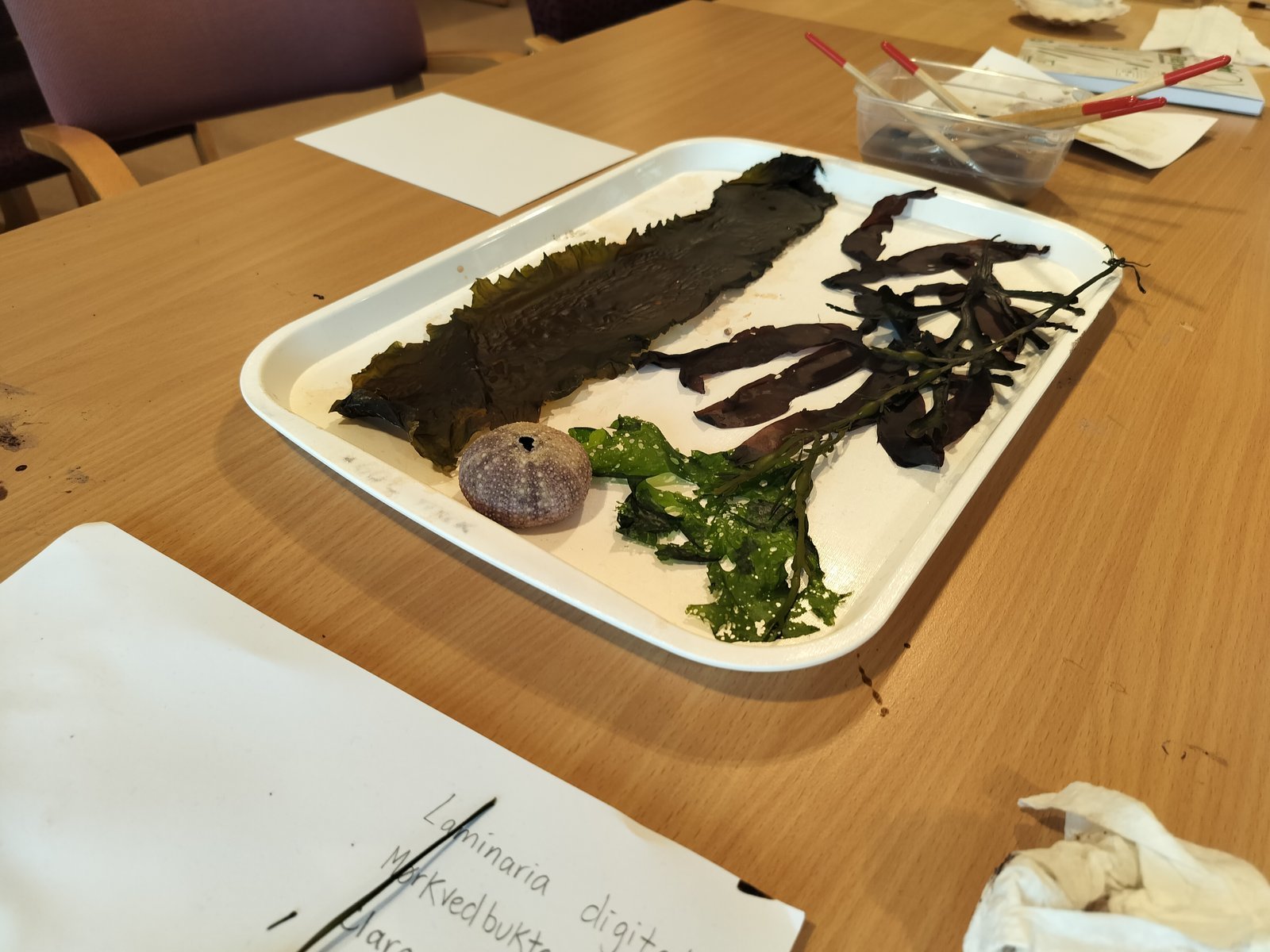
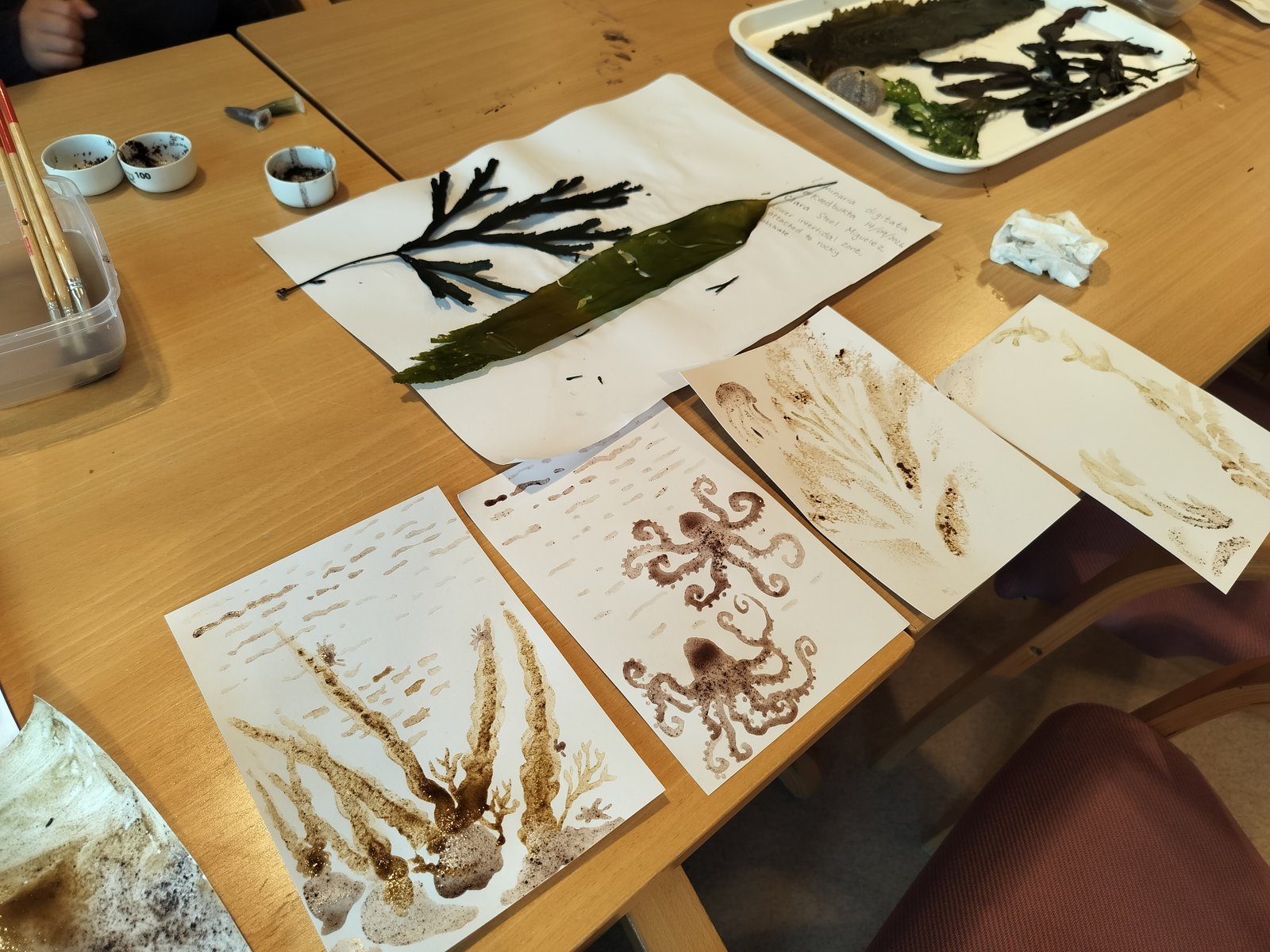
Valnesfjord, 19 September 2026. Book: Noriko på eventyr i tangen (Ting med Tang). Seaweed and urchin paints: Sara Roosvall, NIBIO. Photos: XX
26–28 August 2026
We presented KELPRIME at the WWF Kelp Breeding Convening, Copenhagen.
Researchers, farmers, regulators and NGOs from Asia, North America and Europe met at the Carlsberg
Group Campus, hosted in the Traitomic facility and convened by WWF, to find common ground on kelp
breeding for farming and restoration, on the role and ownership of germplasm collections, and on the
research that would unblock native-strain development and its regulation.
We spoke in the expert session on priming the hatchery as a fast, non-genetic complement to breeding:
a few weeks of altered temperature at the gametophyte stage of Saccharina latissima, with no
genome edit, no new equipment and no narrowing of the gene pool. That last point is why priming sits
beside breeding rather than against it, and it matters here, because much of the meeting turned on how
to keep cultivated and wild populations genetically separate.
Two threads run straight into the rest of our work. Biofouling was raised as the limit on extending the
growth season with heat-tolerant cultivars, which is the question our biofouling projects ask from the
other side. And the point that restoration deliberately releases large numbers of selected individuals
into the sea, more than farm escapes do, bears on how we read population structure in cultivated and
wild kelp. We also learned that hatchery priming is now being tried independently in Japan, Korea and
Norway, which is the clearest sign so far that the approach is being picked up.
WWF on selective seaweed breeding »
July 2026
Three new KELPRIME papers on kelp priming, from lab to farm.
All three ask whether priming young sugar kelp (Saccharina latissima) carries through to cultivation.
(1) A replicated mariculture setup that follows kelp from the gametophyte stage through the hatchery to the farm site, so the effect of pre-hatchery conditions can be tracked to adult sporophyte performance in the field
(Jueterbock et al., Aquaculture Reports, open access).
(2) Whether priming works better on gametophytes or on sporophytes, led by Niko Steiner and Inka Bartsch at the Alfred Wegener Institute
(Steiner et al., Marine Ecology Progress Series).
(3) What priming does at the gene level: gametophyte priming reshapes the heat-stress gene expression of the sporophyte offspring, pointing to a stress memory carried into the next generation
(Nilsen et al., Evolutionary Applications, open access).
30 June 2026
NPBC 2026 featured by Nord University.
Nord University published a write-up of the Norwegian Plant Biology Conference we hosted in Bodø —
three days that gathered around 60 researchers for more than 20 talks, four international keynotes and
a full poster session spanning plant, macroalgal and microalgal biology.
Read on nord.no »
18–19 June 2026
We organised and hosted the Norwegian Plant Biology Conference 2026 (NPBC 2026)
in Bodø — two days bringing together around 80 plant and algal scientists for talks, posters and
keynotes by Caroline Gutjahr, Cyril Zipfel, Gabriel Markov and Lenka Procházková, plus a
pre-conference workshop and a coastal-walk excursion.
Conference website »
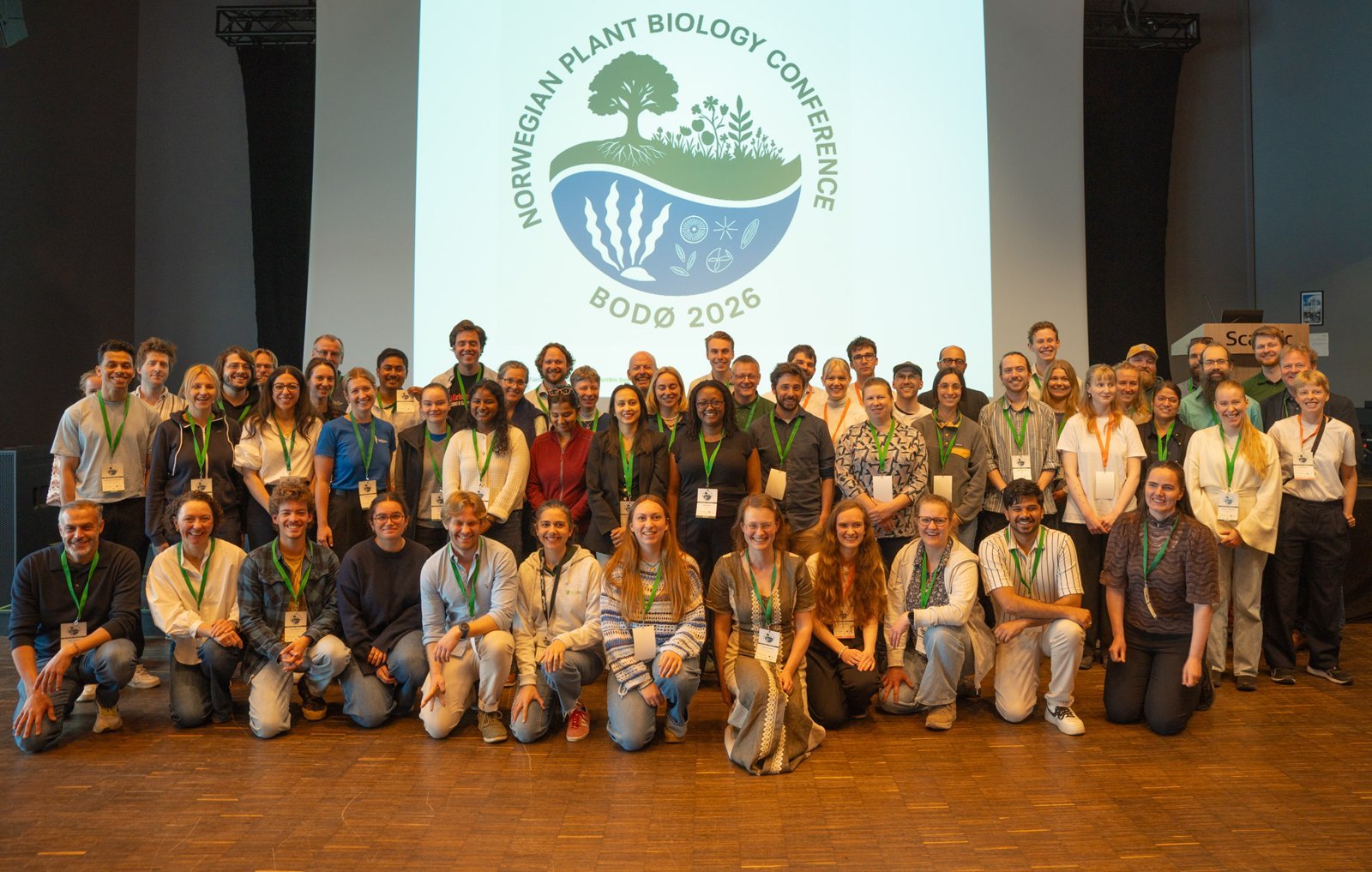
NPBC 2026 participants, Bodø. Photo: Lars Andreas Myrvoll
17 June 2026
AI-assisted coding workshop at Nord.
As a pre-conference workshop for NPBC 2026, Physalia Courses
(Carlo Pecoraro, with Marco Chiarici) ran a full-day, hands-on workshop on AI-assisted coding for
scientific research on our Bodø campus.
Workshop details »
2 June 2026
KELPRIME in the news: Slik blir taren mer hardfør – og lønnsom
(“This is how kelp becomes hardier – and more profitable”). Lise Fagerbakk reports for Nord
University on our finding that cold-primed kelp seedlings grow larger, stronger and more robust at
sea — raising production and profitability without new infrastructure.
Read on nord.no »
7 May 2026
Popular science: Kan tare tilpasses til å takle hetebølger?
(“Can kelp be trained to handle heatwaves?”) — marine biologist Pierrick Stévant writes for the
Norwegian Seaweed Cluster about thermal “priming” of cultivated kelp from the KELPRIME project.
Read on norseaweed.no »
6 March 2024
Kelp on German TV: Vom Klimawandel bedroht – die Kelpwälder vor Helgolands Küste
(NDR “DAS!”), on kelp-forest research at our KELPRIME partner, the Alfred Wegener Institute.
Watch on ndr.de »
1 November 2023
KELPRIME funded: the Research Council of Norway awarded NOK 10.6 million to help Europe’s kelp
forests and kelp farming withstand warming seas (Nord University, Lise Fagerbakk).
English » ·
Norsk »